
Aluminium Window Maintenance: 5-Step Annual Checklist
Technical Guides · 2026/10/21 · 19 views
Keep commercial aluminium windows operating smoothly: hardware lubrication, drainage weep hole cleaning, weatherstrip inspection, and salt-spray washing.
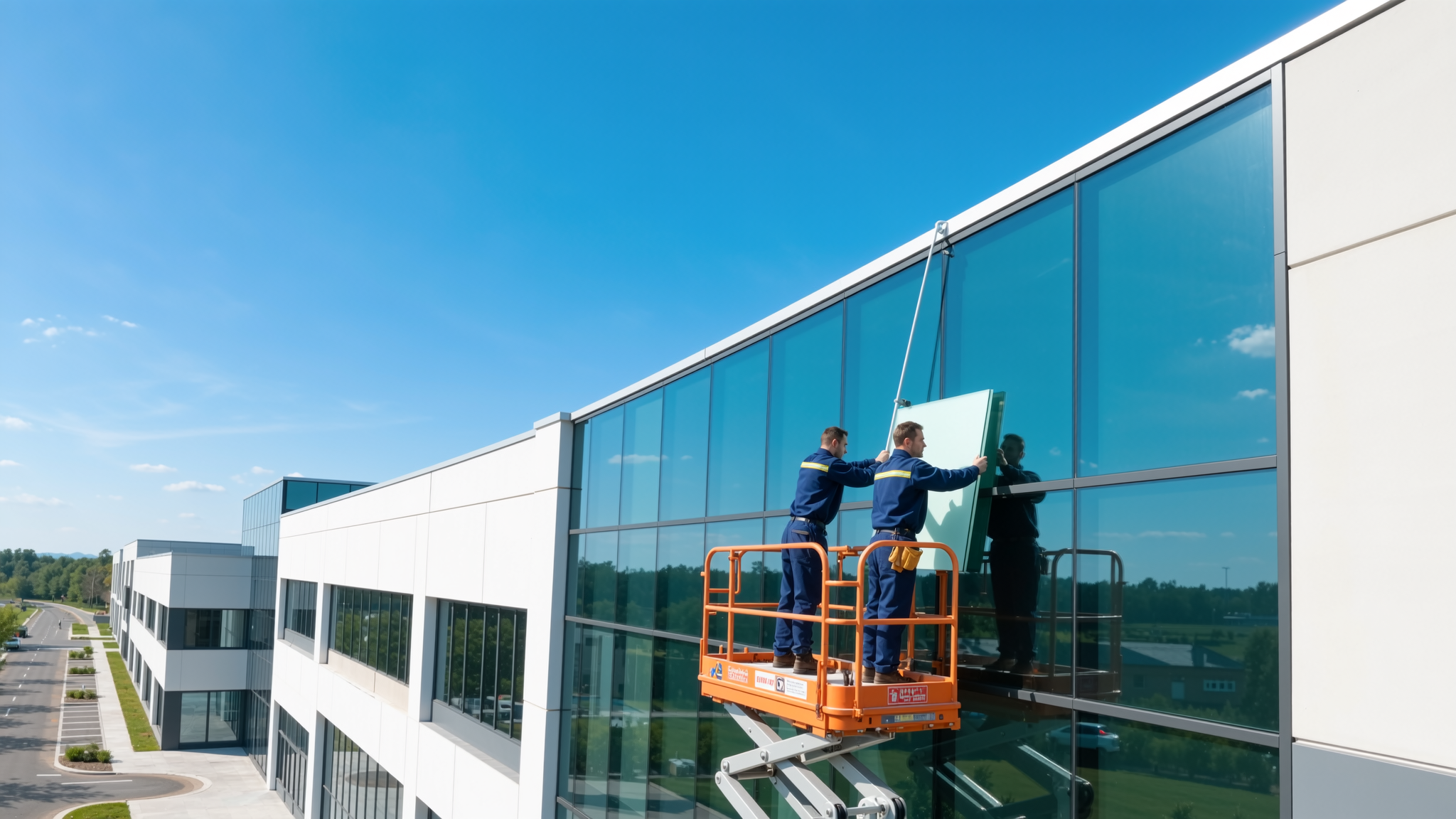
Short answer: Aluminium window maintenance is a scheduled five-step cycle: clean frames and glass, inspect weatherseals, lubricate hardware, clear drainage holes, verify glass sealing. Inland temperate sites run it every six months; coastal salt-fog, industrial and high-rise sites clean and check drainage every three months. Kept to that schedule, a thermal-break system holds its U-value, ASTM E283 Class 4 airtightness and 100,000-cycle hardware rating.
Key takeaways
- Five steps, one visit: cleaning, seals, hardware, drainage and glass sealing take 2 to 3 hours.
- Coastal, industrial and high-rise sites clean every 3 months; inland temperate sites every 6 months.
- EPDM weatherseals reach end of life at 15 to 20 years and are replaced to the original profile.
- Use silicone-based lubricant every 6 months, never oil, which holds dust into abrasive sludge.
- A fogged insulated glass unit has failed its edge seal and is replaced, not repaired.
Why aluminium window maintenance belongs in the O&M manual
Handover documentation usually stops at the warranty certificate. For windows that leaves a gap. The performance published in a submittal, whether U-value 0.8 to 1.6 W/m²K, water penetration to ASTM E331 Class 5A at 600 Pa or structural wind load Class C5 up to 4500 Pa, describes a system in specified condition, not a permanent property of the metal.
Weatherseal compression set, oxidised coating edges and blocked drainage reduce those figures without producing an obvious failure. The defect surfaces as condensation or a stain on the reveal two or three seasons later, when the installing trade has left site. Placing the schedule in the O&M manual converts a performance claim into an auditable routine of named steps and named frequencies, and documented maintenance is the cheapest way to keep an unexpired warranty enforceable. A team that inherits a walk-round checklist and a two-page log spends 2 to 3 hours per unit per year.
Maintenance frequency by exposure
Frequency is set by the aggressive agent on site, not by the window model. Salt fog deposits chloride and accelerates coating breakdown at cut edges; industrial atmospheres deposit particulate that holds moisture against seals; high-rise facades add wind-driven rain that loads the drainage path. Where exposures combine, such as a coastal tower beside a freight corridor, apply the shorter interval to every task.
| Exposure class | Glass and frame cleaning | Weatherseal inspection | Hardware lubrication | Drainage check |
|---|---|---|---|---|
| Inland temperate | every 6 months | annually | every 6 months | annually, before the wet season |
| Coastal salt-fog | every 3 months | every 3 months | every 6 months | every 3 months |
| Industrial and urban pollution | every 3 months | every 6 months | every 6 months | every 6 months |
| High-rise commercial | every 3 months | every 6 months | every 3 months | every 3 months |
Two exceptions belong in writing. Fixed glazing has no hinge wear, so its hardware row falls away while drainage and sealant checks do not. Sealed cavity systems in clean inland locations can run annually if the client accepts it formally.
Step 1 and Step 2: Frame cleaning and weatherseal replacement
Use a neutral-pH cleaner and a soft cloth on powder-coated or anodised aluminium. Acidic and alkaline cleaners attack the coating and leave chalky patches that later read as oxidation. Keep glass cleaner out of the frame joints: apply it to the glass and wipe the gasket separately, because surfactant residue degrades the seal.
Cleaning is also the inspection. Look for scratches, coating damage at corners and mastic joints, and white corrosion product around fixings. Touch up bare metal promptly, since oxidation spreads under a coating once it has an entry point.
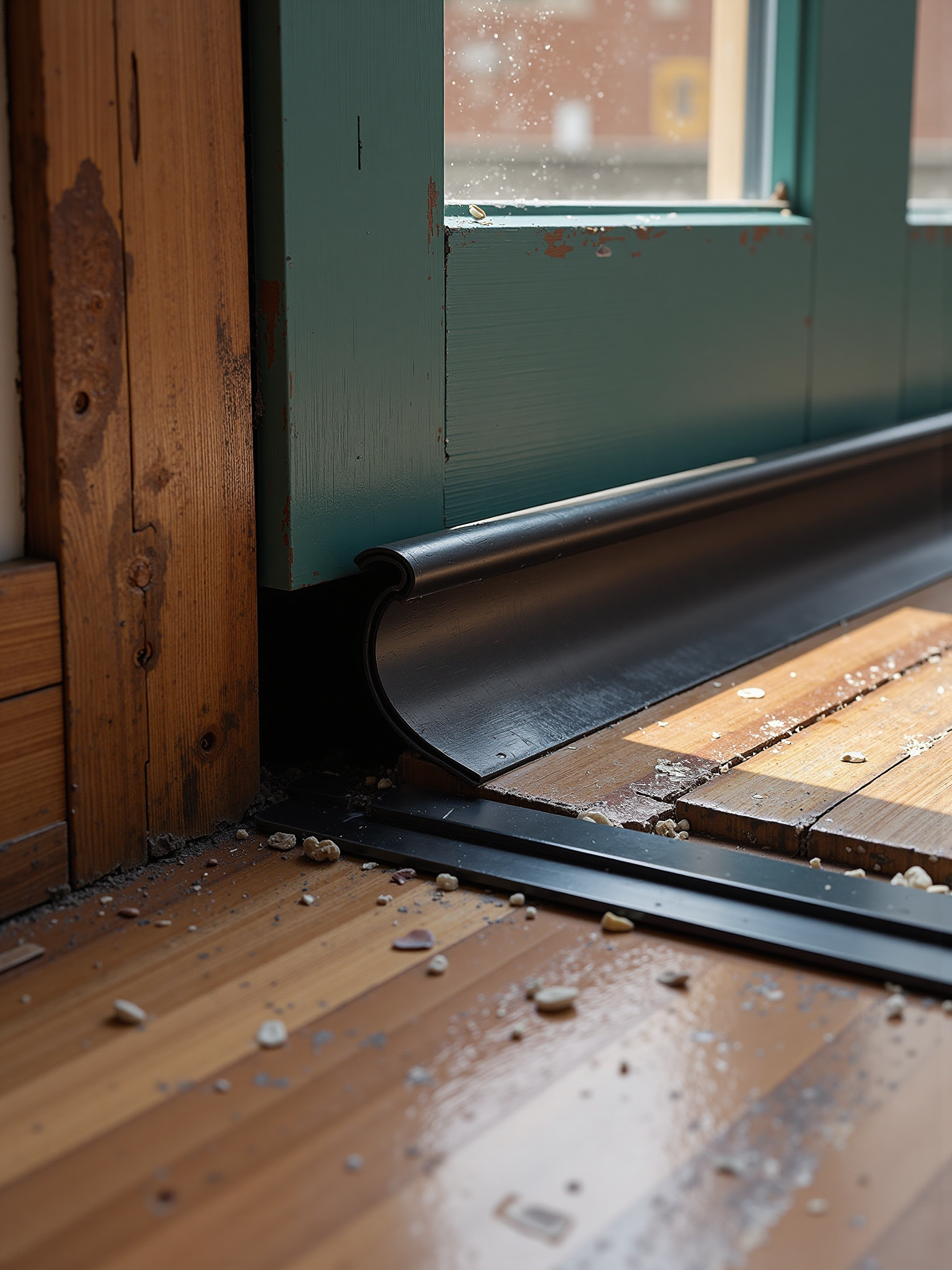
Run a finger along each gasket to find hardening, cracking and compression set. A seal that stays flattened after the sash is opened has lost its recovery and no longer presses against the frame. Compromised lengths are replaced, not dressed with silicone; EPDM profiles typically last 15 to 20 years.
Replacement seals must match the original cross-section profile and hardness. An over-thick gasket stops the sash closing onto its compression stop; an under-thick one leaks under storm pressure. Insert the profile without stretching it, or it pulls back at the corners.
Step 3: Hardware lubrication and functional testing
Hardware runs on a six-month lubrication interval whatever the exposure, because friction wear tracks operating cycles rather than atmosphere. Wipe hinges, tracks, espagnolette bars and locking points with a dry cloth first. Lubricant applied over dust and grit makes an abrasive paste and accelerates the wear it is meant to prevent.

Use silicone-based lubricant, not oil. Oil-based products hold dust and thicken into sludge in a track, which is why so many stiff windows are over-lubricated rather than under-lubricated. Operate the sash through its full travel after application so the lubricant distributes and the gasket reseats.
Treat the pass as a functional test. Listen for unusual noise, feel for slack in the handle or drop at the hinge, and check that every locking point engages without force. Loose components are adjusted or replaced now; a sash that has run out of alignment on a worn hinge for a season needs a hinge and a sash. The tilt and turn window range documents hardware part numbers for exactly this reason.
Step 4 and Step 5: Drainage channels and glass sealing
Drainage holes sit at the base of every frame and channel infiltrated rainwater back to the exterior. They block with dust, pollen, insect debris and, on coastal sites, salt crystals. Clear the channels with a thin wire, then pour water into the sill and watch it exit at the weep slot. If water backs up, the slot is obstructed or an internal baffle has been displaced.
Glass sealing is the fifth step. Check the sealant between glass and frame for cracking, shrinkage or delamination, and repair with neutral-cure silicone after cleaning and drying the surface. Condensation inside an insulated glass unit means the hermetic edge seal has failed; that unit cannot be repaired on site. Record IGU serials at the same visit so a replacement matches the original specification and keeps the facade thermal calculation valid. The test reports behind those figures sit in the certification and test report library.
Records, spares and the five-to-ten-year assessment
A maintenance log turns a schedule into evidence. Record the date, exposure class, steps completed, findings with photographs of any seal or coating defect, parts replaced and the operative. Two pages per project per year is enough, and it is the document a facilities auditor or a warranty claim will ask for.
Hold spares at handover: a coil of the specified EPDM profile, spare drainage caps and the hardware part numbers. A seal replaced from an unmatched profile costs more in lost performance than the part costs in money.
Every 5 to 10 years, commission OPPGATE or a qualified specialist for a full condition assessment, and use it to check whether the site exposure class has changed: new industrial development upwind can move a project from a six-month to a three-month interval. FGIA publishes gasket guidance for writing those intervals into a specification, and ASTM International maintains the E283, E330 and E331 methods the test reports reference.
Frequently asked questions
How often should aluminium windows be maintained?
Run the full five-step cycle every 6 months on inland temperate sites and every 3 months on coastal, industrial or high-rise sites. Hardware lubrication stays at 6 months in every class because it tracks operating cycles, not exposure.
Can a fogged double-glazed unit be repaired on site?
No. Fogging between the panes means the hermetic edge seal of the insulated glass unit has failed, and cleaning will not restore it. The unit is measured and replaced; the frame usually stays.
What lubricant should be used on window hardware?
Silicone-based lubricant, applied to a dry wiped surface every 6 months. Oil-based products attract dust and form abrasive sludge in tracks and around locking points, which raises operating force and accelerates hinge wear.
Do weatherseals need replacing at a fixed age?
No, they are condition-based. EPDM profiles typically last 15 to 20 years, but inspection decides: hardened, cracked or flattened seals are replaced at any age, and the replacement must match the original profile and hardness.
Does maintenance affect the declared U-value of a window?
It protects it. A compressed weatherseal or an obstructed drainage path lowers real airtightness below the tested ASTM E283 Class 4 result even though the glass is unchanged.
Why do coastal projects need a three-month cleaning cycle?
Salt fog deposits chloride on the frame, breaking down coating at cut edges and accelerating corrosion at fixings. Cleaning every 3 months removes the deposit before it holds moisture there. NFRC rated assemblies and Efficient Windows Collaborative data assume maintenance as specified.
Send a window schedule, CAD DWG or PDF elevation to karen@oppgates.com and OPPGATE returns a technical quotation within 24 to 48 hours, with lead time of 20 to 30 calendar days after drawing approval. The same team can write the intervals for your exposure class into the O&M manual. Start with the project intake form or the technical FAQ.