

- Thermal break barriers decouple interior and exterior aluminum chambers using low-conductivity polyamide (PA66 GF25).
- Thermal break systems lower window U-values from 5.0+ W/m²K down to 1.4–1.8 W/m²K.
- Completely eliminates interior surface condensation in humid or cold climates.
- Higher sound dampening (reduces structural acoustic vibration by up to 5dB).
1. What Is a Thermal Break and How Does It Work?
Aluminum is one of the world's most versatile, durable and structurally rigid architectural framing materials. However, pure aluminum has a high thermal conductivity ($k \approx 160-200\text{ W/m}\cdot\text{K}$), meaning heat quickly conducts through the frame. In summer, outdoor solar heat pours inside; in winter, interior room warmth escapes rapidly, causing cold drafts and window glass fogging.
A thermal break (also known as a thermal barrier) solves this physical limitation. Precision extrusion engineering separates the aluminum frame into two independent exterior and interior extrusions, then permanently joins them using an engineered insulating strut made of Polyamide 6.6 with 25% fiberglass reinforcement (PA66 GF25).
2. Engineering Performance Matrix: Thermal vs. Non-Thermal
| Technical Parameter | Non-Thermal Break Aluminum | Thermal Break Aluminum (PA66 24mm) |
|---|---|---|
| Thermal Transmittance (Uf Frame) | 5.5 – 6.8 W/m²K | 1.6 – 2.2 W/m²K |
| Overall Window U-value (Uw) | 3.8 – 4.5 W/m²K | 1.3 – 1.8 W/m²K (with Low-E glass) |
| Interior Condensation Resistance | Poor (Sweating occurs below 10°C) | Excellent (No condensation above -15°C) |
| Acoustic Attenuation (Rw) | 28 – 32 dB | 35 – 42 dB |
| Structural Rigidity | High | High (Reinforced with composite shear bond) |
| Building Energy Code Compliance | Non-compliant for temperate/cold zones | Meets IECC, Title 24, CE EN 14351 & AS2047 |
3. The Critical Role of Polyamide PA66 GF25
Not all thermal breaks are created equal. Lower-grade manufacturers sometimes use PVC or pour-and-debridge polyurethane resin with inferior thermal expansion matching. OPPGATE strictly utilizes imported high-grade PA66 GF25 strips. Why? Because the coefficient of thermal expansion of PA66 GF25 ($2.4 \times 10^{-5}\text{ K}^{-1}$) almost exactly mirrors aluminum ($2.3 \times 10^{-5}\text{ K}^{-1}$), preventing structural warping, joint shearing or air leakage across extreme temperature swings from -40°C to +80°C.
4. Long-Term Commercial ROI for Developers
While thermal break systems carry a 15–25% higher initial material investment, they lower HVAC heating and cooling electrical loads by 30–45% annually. For commercial hotels, multi-family apartment complexes and luxury residences, the payback period is typically achieved within 3 to 4 operating years, while elevating tenant comfort and building resale valuation.
Frequently Asked Questions
What is the thermal conductivity of a thermal break strip?
PA66 GF25 has a thermal conductivity of approximately 0.3 W/m·K, which is over 500 times lower than pure aluminum (160 W/m·K), virtually stopping thermal bridging.
Can thermal break aluminum windows be dual-colored?
Yes. Because interior and exterior profiles are extruded separately before rolling, you can specify custom RAL colors or woodgrain finishes inside and architectural fluorocarbon bronze or black outside.
Are thermal break windows hurricane rated?
Yes. When engineered with reinforced structural mullions, laminated safety glass and multi-point perimeter compression locking, thermal break systems easily achieve Miami-Dade NOA hurricane ratings.
Explore OPPGATE Aluminum Windows
Thermal break aluminum sliding, casement, tilt-and-turn and panoramic window systems for global residential and commercial projects.
View All Aluminum Windows Models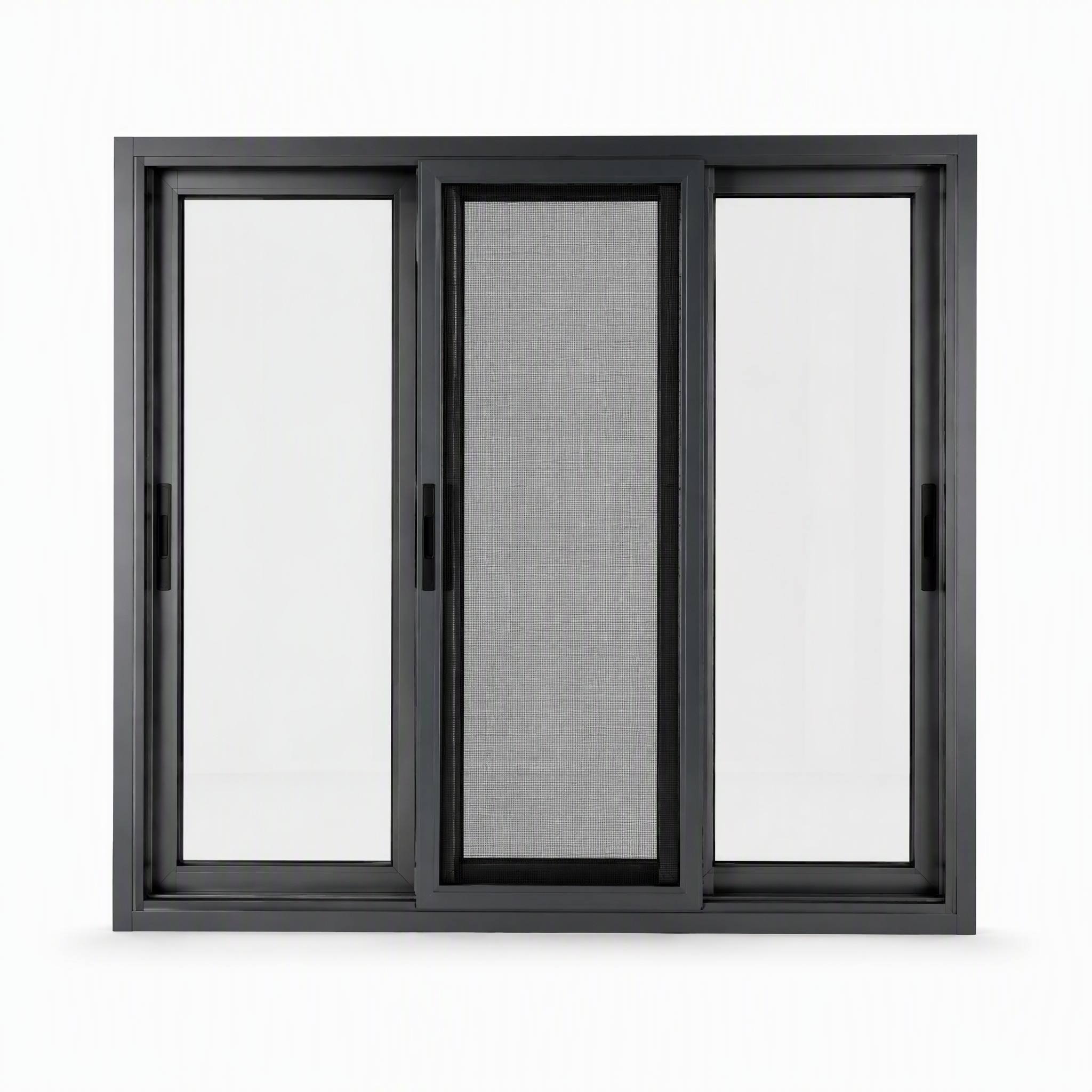
Planning a Commercial or Villa Project?
Send your window schedules or architectural CAD drawings to the OPPGATE engineering team for a prompt, certified quotation and structural review.
Request an Engineered Quotation