
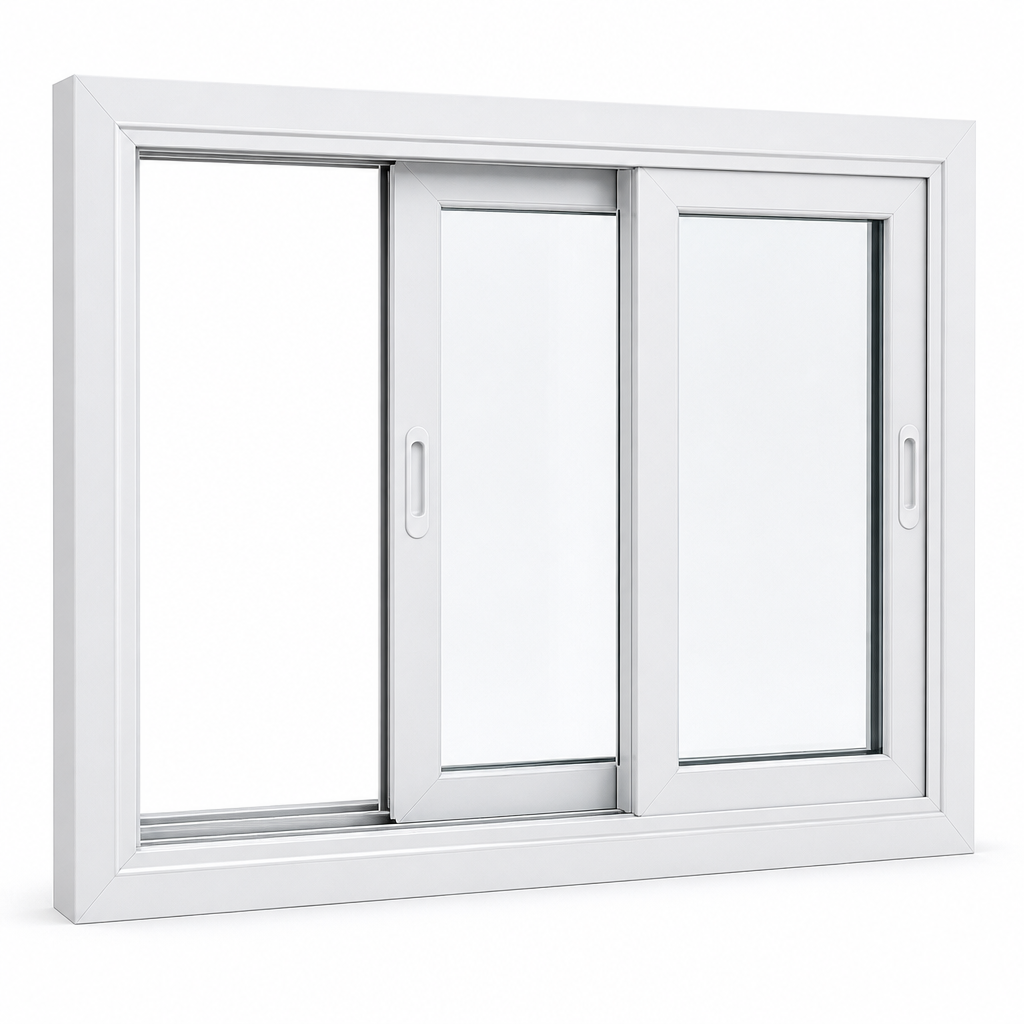
- uPVC delivers class-leading native thermal insulation at a lower initial cost per square meter.
- Aluminum provides unmatched structural strength, supporting monumental floor-to-ceiling glass spans.
- uPVC is impervious to coastal salt-spray corrosion, making it ideal for tropical and island developments.
- Aluminum offers ultra-slim frame sightlines and architectural PVDF finish flexibility.
1. Fundamental Material Characteristics
Architects, project developers and general contractors frequently debate whether to specify Unplasticized Polyvinyl Chloride (uPVC) or Extruded 6063-T5 Aluminum Alloy. Each material possesses distinct engineering merits designed for specific architectural typologies.
uPVC is an engineered polymer chambered profile with an internal galvanized steel reinforcement cage (1.5mm–2.0mm thick). Aluminum is an extruded non-ferrous metal boasting high strength-to-weight ratios, allowing narrow sightlines and expansive panoramic glass panels.
2. Comparative Specification Matrix
| Specification | Multi-Chamber uPVC (Steel Core) | Thermal Break 6063-T5 Aluminum |
|---|---|---|
| Frame Native Thermal Conductivity | 0.14 – 0.17 W/m·K (Natural insulator) | 160 W/m·K (Requires PA66 thermal strip) |
| Max Sash Span / Weight | Up to 1.8m width / 120kg | Up to 3.5m+ height / 400kg+ |
| Sightline Profile Width | 70mm – 95mm (Broader) | 35mm – 60mm (Ultra-slim) |
| Coastal Salt Spray Resistance | Immune to oxidation and chemical rot | Requires PVDF / marine anodized finish |
| Service Lifespan | 30 – 40 Years | 50+ Years |
| Relative Cost Index | Baseline (1.0x) | 1.3x – 1.6x (Thermal break tier) |
3. Thermal Insulation and Acoustic Comfort
Because uPVC is naturally non-conductive, multi-chambered vinyl profiles trap air pockets within 5 to 7 independent cavities. This natural dampening makes uPVC exceptionally quiet and energy-efficient for residential developments, hotels near highways and cold-climate social housing.
Conversely, thermal break aluminum achieves equivalent or superior U-values when paired with 24mm–34mm wide PA66 insulation strips and triple-glazed argon units, while offering greater structural rigidity against high-rise wind loads.
4. Which System Should You Specify?
Specify uPVC when: Budget optimization, residential acoustic insulation, coastal humidity resistance, and rapid modular installation are primary priorities.
Specify Aluminum when: Your project demands monumental floor-to-ceiling glass walls, minimalist architectural sightlines, custom metallic PVDF finishes, or hurricane-rated structural spans exceeding 3 meters.
Frequently Asked Questions
Does uPVC turn yellow under intense tropical sunlight?
No. High-quality uPVC manufactured by OPPGATE uses eco-friendly titanium dioxide ($TiO_2$) and calcium-zinc stabilizers that resist UV discoloration, passing 6000-hour accelerated weathering tests.
Can uPVC frames match dark architectural colors?
Yes. Through co-extrusion and high-durability German Renolit architectural exterior foils, uPVC can achieve matte anthracite grey, bronze, and natural woodgrain textures.
What is the MOQ for containerized export orders?
For containerized ocean shipments via Dalian or Qingdao ports, OPPGATE supports mixed container packing with low minimums starting from 1 unit for custom samples or 20 m² for bulk project tiers.
Explore OPPGATE uPVC Windows
Multi-chamber uPVC sliding and casement window systems with customized double/single glazing and security hardware.
View All uPVC Windows ModelsPlanning a Commercial or Villa Project?
Send your window schedules or architectural CAD drawings to the OPPGATE engineering team for a prompt, certified quotation and structural review.
Request an Engineered Quotation